7 Common Mistakes When Reporting Potholes, Streetlights, and Fly-Tipping
Two people walk past the same broken streetlight on the same evening and both report it. One gets a reply within a day saying the repair is booked. The other gets a generic acknowledgement, then nothing. The difference is rarely luck. It is almost always the quality of the report — where it points, what it shows, and how clearly it states the problem.
Councils and highway teams process thousands of these reports a year, and most of them are triaged quickly by someone matching a location to a map and a description to a set of criteria. Give them what they need in the first message and you skip a round of emails. Here is what tends to go wrong.
1. The location is too vague to act on
"Outside the Co-op on the high street" sounds precise if you live there. To a depot supervisor in another town, it could mean three entrances across 200 metres. A crew sent to the wrong end of a street costs a wasted visit, and your report goes back into the queue.
Give a street name plus a number, a junction, or a landmark with a direction attached. For streetlights, the column usually carries a small stencil or sticker with an identification number — that number is worth more than any description you can write. For potholes and fly-tipping, a dropped pin or a what3words reference solves the problem instantly if your council's form accepts one.
Add the side of the road and the direction of travel where it matters: "northbound, just past the bus stop" tells a crew which lane to close, or whether they need to close one at all.
2. Photos that show the problem but not the place
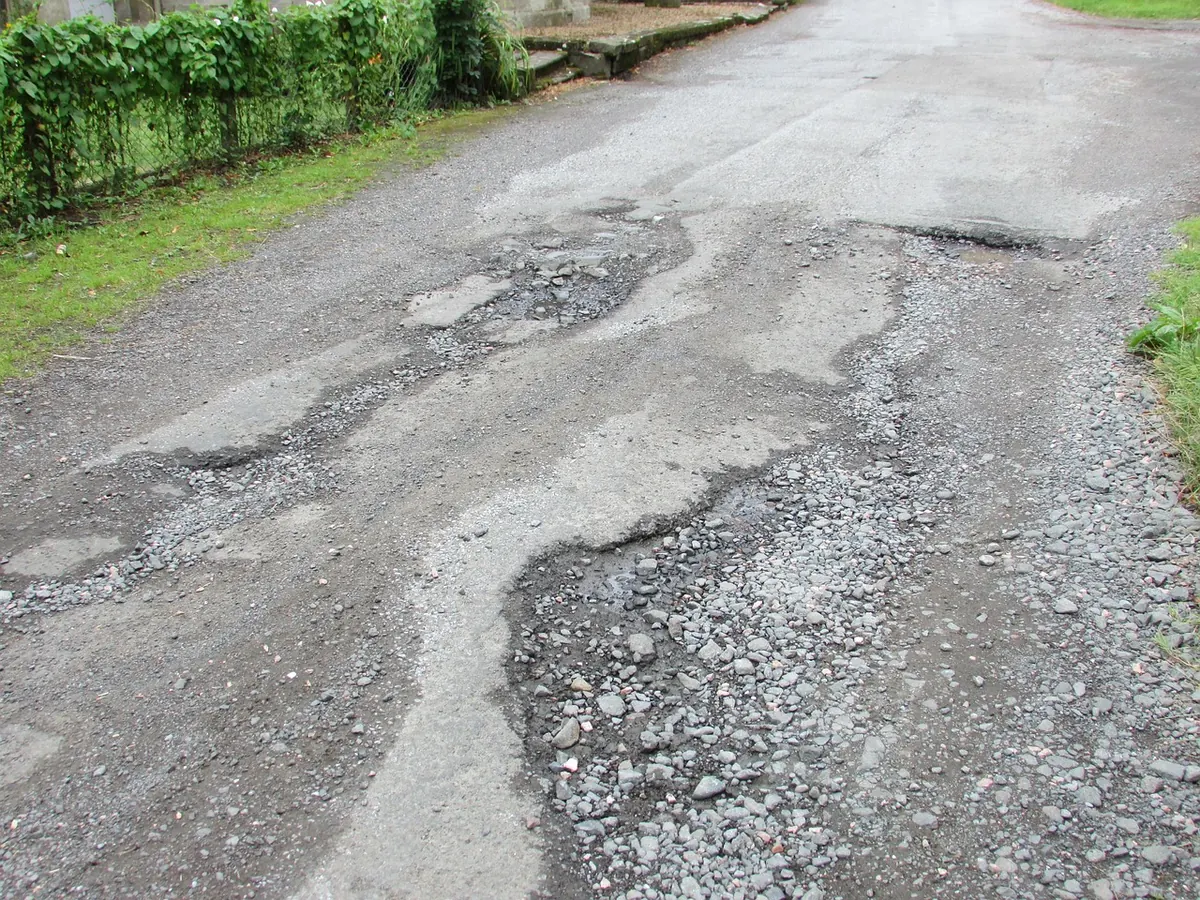
A close-up of a pothole with nothing but tarmac around it is nearly useless. So is a photo taken at night with a phone torch, which flattens depth and turns everything into a grey blur.
- One wide shot from the pavement or verge, showing the street, nearby buildings and the position of the defect within the road.
- One close shot with scale — a foot, a boot, a coin or a tape measure beside the pothole. Depth is what decides priority, and depth is what photos hide.
- One approach shot from the direction a driver or cyclist meets it, so the team understands the risk.
- For streetlights: the column number, plus a night shot showing the lamp is dark while its neighbours are lit.
- For fly-tipping: a wide shot of the whole pile and what surrounds it, plus a close shot of any labels or packaging that identify the waste.
Take the photos from the pavement, never from the middle of the road, and never while driving. Nothing you capture is worth that risk.
3. Leaving out the detail that decides priority
Most reporting systems sort jobs by hazard, not by annoyance. Say the things that shift a case up the list.
For a pothole: roughly how deep and wide it is, whether it fills with water, whether it sits in a wheel track, on a cycle route, near a crossing, outside a school, or on a bus route. If it has grown since you first noticed it, say so — a defect that is deteriorating is treated differently from one that is stable.
For a streetlight: whether the whole lamp is out or it is flickering, whether it is one column or the whole street, and whether anything is visibly unsafe — an open inspection door, exposed wiring, or a leaning column. If you see damaged wiring, ring the council's emergency line rather than filling in a web form.
For fly-tipping: the rough volume (a car boot, a van load), the type of waste, and whether it blocks a pavement, a driveway or a gate. Note if it is near a drain, a brook or a play area. Do not open bags or move anything. If you suspect asbestos, chemicals, syringes or other hazardous material, stay back and ring the council's environmental team so it is logged as a specialist clearance.
4. Bundling several problems into one report
A single message listing four potholes, a dead streetlight and a dumped fridge feels efficient. It usually is not. Different issues go to different teams with different deadlines, and a combined report is often closed on the first job completed — taking the rest with it.
Send one report per issue, even if it means filling in the form three times. If a stretch of road has multiple potholes, report them individually, or at least identify each one by a nearby marker so an inspector can find them all.
5. Losing the reference number
The acknowledgement email contains a reference number and, usually, a stated response time. Save both. Put the reference in a note on your phone with the date you reported it.
Then wait for the stated period before chasing. When you do follow up, reply to the original email or quote the reference — don't start a fresh report, which creates a duplicate and resets the clock. A short, calm message works best: the reference, the location, a reminder that the defect is still there, and a request for the job number if it has been passed to a contractor.
6. Assuming someone else has already reported it
Check the council's reporting map or a public fix-it style tool if your area has one. If the issue is already logged, you can add your own report and photo as supporting evidence — especially useful for a pothole that is visibly worsening. Repeat reports from different addresses are one of the few things that reliably move a job up a schedule.
The other common mistake is reporting to the wrong owner. A supermarket car park, a housing association estate, a retail park and a canal towpath are usually not the council's responsibility. If the online form refuses your location or the response says it is not theirs, ask who owns the land — the council's highways team will usually tell you, and a parish or ward councillor can point you in the right direction.
Before you hit send: a five-point check
- Exact location, with a pin, a column number or a building number and side of road.
- Two or three photos: wide, close with scale, and from the approach.
- One sentence on what the hazard is and who it affects.
- One issue per report.
- Reference number saved, with the date and the promised response time.
None of this takes more than a couple of minutes longer than a rushed report. It is the difference between a message someone has to decode and a job that lands on a schedule.
Photo: Kasman / Pixabay